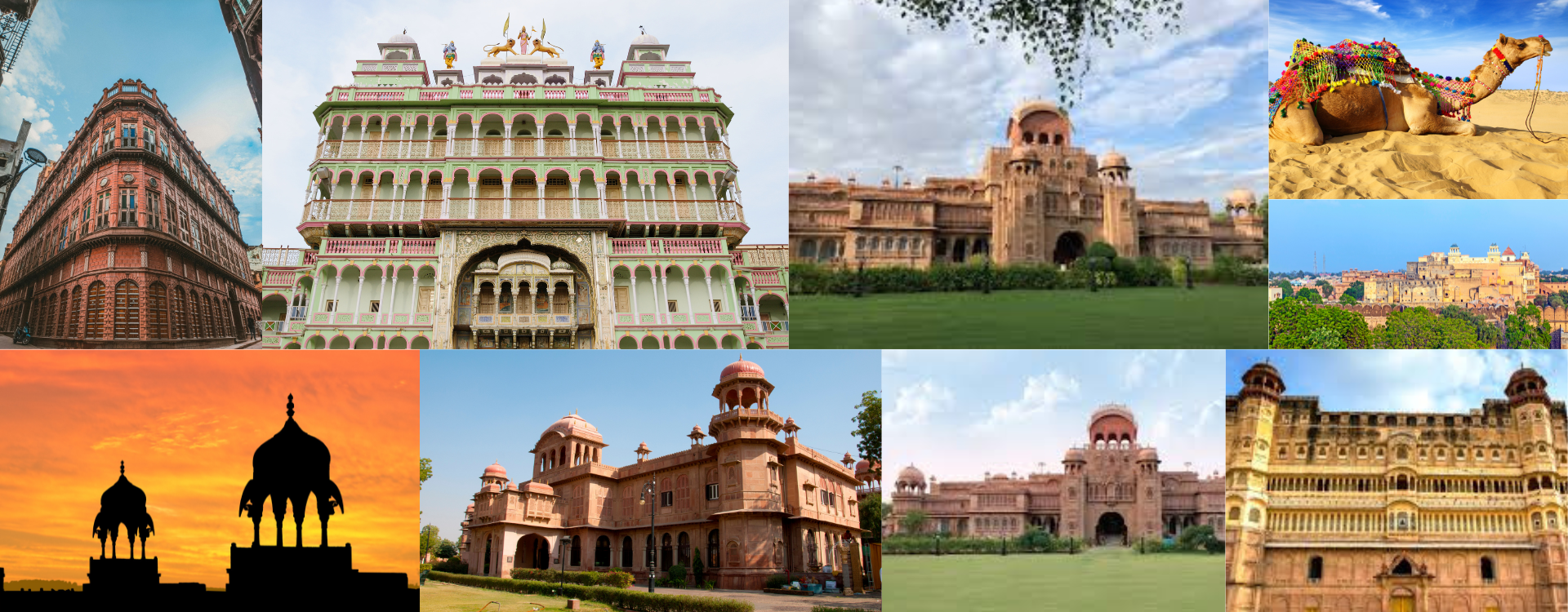
Arid and semi-arid regions, characterized by scarce rainfall, extreme temperatures, and
fragile ecosystems, present unique challenges to agricultural and horticultural development.
Yet, these landscapes also hold immense potential—rich in native biodiversity, adaptive
crop species, and traditional knowledge systems that can guide sustainable resource use. In
the face of accelerating climate change, the need to harness this potential through
innovative, resilient, and ecologically sound horticultural practices has never been greater.
The National Conference on Arid Horticulture aims to bring together researchers,
policymakers, farmers, entrepreneurs, and other stakeholders to share insights, scientific
advancements, and success stories that strengthen the horticultural base of arid regions. By
emphasizing biodiversity conservation, climate-smart technologies, and sustainable
production systems, the conference seeks to chart a course toward food, nutritional, and
livelihood security in these challenging environments. Through collaborative dialogue and
knowledge exchange, this event aspires to shape a sustainable future, where arid horticulture
not only survives but thrives—building resilience, enhancing productivity, and fostering
harmony between people and nature.

The ICAR–Central Institute for Arid Horticulture (CIAH), Bikaner, Rajasthan has been at the forefront of research, development, and dissemination of technologies for harnessing the potential of arid horticultural crops. Through scientific innovation, conservation of indigenous germplasm, and promotion of climate-resilient production systems, the institute continues to play a pivotal role in transforming the arid landscapes of India into hubs of sustainable horticultural growth. In this context, the National Conference on Arid Horticulture “Shaping Sustainability for the Future through Biodiversity and Climate Resilience” serves as a platform to bring together researchers, policymakers, entrepreneurs, and farmers to deliberate on current challenges, emerging opportunities, and innovative strategies for the holistic development of arid horticulture. The conference aims to foster collaborative efforts toward ensuring food and nutritional security, livelihood enhancement, and environmental sustainability in the arid zones of the country.
IAS, an integral part of BHU, was established in 1931 as the Institute of Agricultural Research by Bharat Ratna Pandit
Madan Mohan Malaviya ji, who recognized the critical role of agriculture in India’s economy. It was the first
institution in the country to offer M.Sc. (Ag.) and Ph.D. (Ag.) degrees, marking a milestone in postgraduate
agricultural education and research. Undergraduate teaching began in 1945, and the Institute initially functioned
as the College of Agriculture under the Faculty of Engineering. In 1968, it became an independent Faculty of Agriculture
and was later upgraded to the Institute of Agricultural Sciences in 1981, bringing together all major disciplines of
agriculture, including Food Science and Dairy Technology.
Currently, IAS-BHU ranks 3rd among Agricultural Universities and Institutes in India. It offers internationally relevant academic
programs in Plant Sciences, Soil Health, Agronomy, Horticulture, and Biotechnology. The Institute is actively engaged in
research areas such as climate-resilient agriculture, sustainable food systems, and innovations for smallholder farmers
contributing significantly to both national and global food security. It has established strong collaborations with reputed
national and international agricultural organizations, including CGIAR and other leading scientific institutions, to advance
research and innovation.
Over its 93-year journey, the Institute has played a pivotal role in developing high-yielding popular crop varieties,
eco-friendly agricultural technologies, and skilled human resources. Recognizing the demands of the 21st century, the
Institute introduced 11 specialized academic programs during post-2006 in agriculture and management. To strengthen
Animal Science education and research, a separate Faculty of Veterinary and Animal Sciences was established in 2015
at the Rajiv Gandhi South Campus, Barkachha, Mirzapur.
The Institute continues to fulfil its mandate of advancing agricultural growth through cutting-edge research,
human capital development, and technology dissemination. Notably, BHU’s foundation day, celebrated on Basant Panchami,
symbolically aligns with the blooming of crops during spring, reflecting the deep-rooted agricultural spirit embedded
in the University vision.
The Department of Genetics and Plant Breeding is one of the major Departments of the IAS–BHU, dedicated in generating world class human resources, developing high-yielding, stress-tolerant, and climate-resilient crop varieties through a blend of classical breeding and modern genomic tools. The Department has released large number of important varieties, including newly released Malviya Manila Sinchit Dhan 1 and submergence-tolerant HUR 105 Sub 1 in rice; wheat varieties like HUW 234, HUW 318, HUW 510, and the biofortified, blast-resistant Malviya 838 (HUW 838) with enhanced zinc and iron; and Malviya Nidhi mustard, known for early maturity, bold black seeds, and high oil content. Its active collaborations with National and International Organizations like ICAR, IRRI, ICRISAT, CIMMYT, DBT, BARC etc. support its research in molecular breeding, genome editing, and genetic resource management. The Department continues to play a vital role in promoting sustainable agriculture, improving food and nutritional security and human resource development.
| Registration Begins | 08 September, 2025 |
| Last date for Abstract Submission | 23 December, 2025 |
| Abstract Acceptance Notification | 30 December, 2025 |
| Last Date of Early Bird Registration | 30 December, 2025 |
| Conference Regular Registration | until 25 January 2026 |
| Participant Category | Early Bird Registration | Regular Registration | ||
| Indian Delegates | Foreign Delegates- | Indian Delegates | Foreign Delegates- | |
| Student | ₹ 3,000/- | $ 100/- | ₹ 4,000/- | $ 150/- |
| RA/SRF/JRF/YP | ₹ 4,000/- | $ 150/- | ₹ 5,000/- | $ 200/- |
| Scientist/Faculty | ₹ 6,500/- | $ 200/- | ₹ 7,500/- | $ 250/- |
| Accompanying person* | ₹ 3,000/- | $ 100/- | ₹ 4,000/- | $ 150/- |
| Industry Representative | ₹ 10,000/- | $ 200/- | ₹ 12,000/- | $ 250/- |
Registration fees do not include payment gateway charges.
Additional charges vary based on your payment method and are to be borne by the participant.
* Food Expensed Only No Kit will be provided.
Prof. Ajit Kumar Chaturvedi
Hon’ble Vice-Chancellor, Banaras Hindu University
Dr. Yvonne Pinto
DG, IRRI, Phillipines
Dr. Himanshu Pathak
DG, ICRISAT, Hyderabad
Prof. U. P. Singh
Director, I.Ag.Sc., B.H.U.
Prof. U. P. Singh
Dean, Faculty of Agriculture, B.H.U.
Prof. Shravan Kumar Singh
Senior Professor & Head, Department of Genetics and Plant Breeding, I.Ag.Sc., B.H.U.
Prof. Rajesh Singh
Senior Professor, Department of GPB
Prof. Vinod Kumar Mishra
Senior Professor, Department of GPB
Dr. J. Jorben
Assistant Professor, Department of GPB
Dr. Kumari Shikha
Prof. Kartikeya Srivastava
Prof. P. K. Singh
Department of GPB, I.Ag.Sc., B.H.U.
Dr. Anil Kumar Singh
Dr. B. Arun
Dr. Jayasudha S
Dr. Sandeep Sharma
Assistant Professors, Department of GPB
Dr. Anil Kumar Singh
Assistant Professor, Department of GPB

Varanasi, also known as Kashi or Banaras, is one of the oldest living cities in the world and holds immense cultural,
spiritual, and historical significance. Kashi has been a centre of learning for thousands of years and is home to
Banaras Hindu University (BHU), one of Asia’s largest and most prestigious institutions. Revered as the holiest city
in Hinduism and regarded as the spiritual capital of India, Varanasi is known as the city of temples, with the Kashi
Vishwanath Temple one of the twelve Jyotirlingas of Lord Shiva being the most prominent. The sacred River Ganga flows
through the city, and its 84 beautiful Ghats attract visitors from around the world seeking peace and spirituality.
Nearby, Sarnath holds global significance as the site where Lord Buddha gave his first sermon. Natural attractions
such as the scenic Lakhaniya Dari waterfall and other seasonal cascades further enhance the city’s charm. With its
sacred energy, ancient wisdom, academic excellence, and rich cultural traditions including classical music, dance,
literature, crafts, and the world-famous Banarasi silk sarees, Varanasi offers a truly enriching and transformative
experience. It serves as a perfect venue for this conference, where minds meet, ideas flourish, and knowledge transcends boundaries.
To Reach Varanasi -
Varanasi is easily accessible from all parts of the country and across globe. Very well connected by road, rail and air,
the City offers convenient and comfortable travelling options to and from other cities . Lal Bahadur Shastri international
airport (28 km from BHU) has multiple domestic and international flights operating daily.
Department of Genetics and Plant Breeding
Institute of Agricultural Sciences, BHU
Varanasi, Uttar Pradesh, India
Dr. J Jorben, Organizing Secretary - +917065771919
Dr. Kumari Shikha, Joint Organizing Secretary - +919031989382
Technical issues - EventUP Team - eventupindia@gmail.com
iccra26@bhu.ac.in